
Menu
Your Cart
We handle a wide range of tasks: from working with concrete to processing wood and metal.
Manufacturing process

Mold preparation

We use complex mold systems, which we develop ourselves for each new product.

Izdelava kalupov Izdelava kalupov 2
Mešanje 1 Mešanje 2

Mixing

The basic materials are cement, sand, and water. Through a balanced ratio and special additives, we have developed the ideal mixture over the years, which provides a beautiful final appearance, even on bold shapes.

Molding

This is where the feel for the material comes into play. We must carefully control all factors, such as temperature, time, and vibrations...

Vgrajevanje betona 1 Vgrajevanje betona 2
Finalizacija 1 Finalizacija 2

Finalization

To ensure everything is as it should be, we must flip each board three times before assembly, check the functionality of each ashtray on the bin, and test the solar bench in real conditions for several days.

Materials and care

Types of rocks

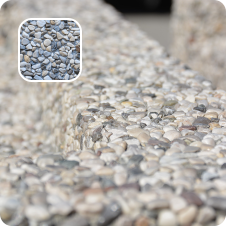
River gravel
River gravel
A natural material shaped over centuries in the pure, fast‑flowing waters of the Alpine environment. Its finely polished, softly rounded grains are formed through long‑term natural abrasion in the riverbed. From a distance, its seemingly grey colour palette ranges from beige to subtly greenish tones, offering a timeless match for a wide variety of architectural styles and colour schemes. It is an affordable material and a classic choice for those seeking natural aesthetics and quality. More than just functional, it is a piece of natural heritage — refined through time and shaped by the forces of nature.
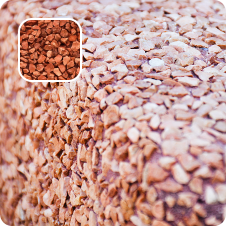
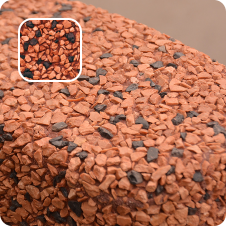
Rosso Verona
Rosso Verona
Kamen tople opečnato rdeče barve z enakomerno strukturo, ki prostoru doda naravno eleganco in zgodovinski značaj. Gre za kompakten apnenec iz severne Italije, ki se zaradi svoje gostote in možnosti sijajne obdelave pogosto uporablja kot marmor. Njegova barva je obstojna tudi na prostem ter se odlično ujema z različnimi materiali – od lesa do kovin. V arhitekturi ga najdemo tako v tradicionalnih kot sodobnih objektih, kjer s svojo izrazito barvo ustvarja kontrast in toplino. V kamnu so pogosto vidni fosili, ki mu dajejo dodatno estetsko in naravno vrednost. Nastal je v obdobju triasa, pred več kot 200 milijoni let.
Fantasy
Fantasy
A blend of Nero Ebano and Rosso Verona stone combines two contrasting yet premium natural materials in a balanced ratio that creates a striking and unique visual effect. The mysterious black elegance of Nero Ebano intertwines with the warm brick‑red tones of Rosso Verona in a bold harmony that stands out in any setting. This combination of two very different stones results in a material with strong character and visual impact. The effect it creates draws attention and remains memorable — recognisable, direct, and confident. It is not merely an aesthetic choice but a statement for those who dare. A solution for contemporary surfaces that demand character and courage.
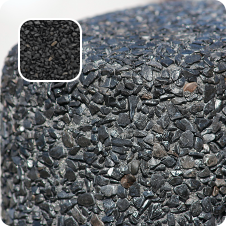
Nero Ebano
Nero Ebano
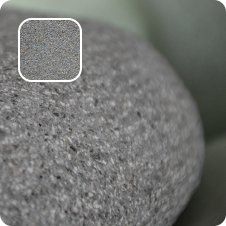
Black marble with subtle light veining creates a sense of calm elegance. Its timeless appearance makes it a popular choice for both modern and classical settings. At a time when anthracite tones are on the rise, Nero Ebano is becoming an increasingly sought‑after material for high‑end outdoor furnishings. Its origin in the Alpine region between Italy and Austria gives it a distinctive character. As one of the few dark European marbles, it offers an environmentally friendly alternative to imported black stones. An elegant choice that combines local origin, prestige, and contemporary design trends.
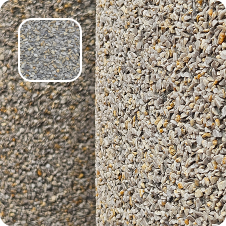
Biege
Biege
A natural material from a Slovenian quarry, distinguished by its warm golden‑yellow to light grey tones. It provides a refined and orderly appearance in a wide range of architectural and landscape applications. Thanks to its strength and stability, it is an ideal choice for projects where both aesthetics and durability matter. A timeless solution for those seeking a local, premium material with natural elegance. Its geological story reaches back hundreds of millions of years, to a time when shallow, warm seas covered what is now Slovenia. Its gentle colour and mineral composition reflect the quiet of geological time, while today it serves as a subtle and sophisticated choice for shaping contemporary urban spaces.
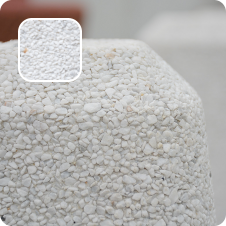
Bianco Carrara
Bianco Carrara
One of the most recognisable and widely used marbles in the world, its soft white colour brings light, elegance, and refinement to any space. Quarried in Tuscany, it has been extracted continuously for more than 2,000 years — Michelangelo carved his legendary David from this very stone. This natural material does not follow trends; it creates them, establishing a calm yet distinctive aesthetic wherever it is used. However, because white surfaces require more care, it is intended for those who appreciate perfection and are willing to maintain it. Anyone choosing this material should keep in mind that occasional cleaning is necessary to preserve its premium appearance.
Sandblasted
Sandblasted
It is one of the most recognizable and widespread marbles in the world, whose gentle white tone brings light, elegance, and refinement to any space. It is quarried in Tuscany, where extraction has continued uninterrupted for more than 2,000 years – it was from this very stone that Michelangelo carved his legendary David. This natural stone does not follow trends; it creates them, establishing a calm yet distinctive aesthetic through its mere presence. However, because white surfaces require more attention, it is intended for those who appreciate perfection and are willing to care for it. Anyone choosing this material should keep in mind that, to preserve its premium appearance, occasional cleaning will be necessary.
Concrete care
The concrete elements exceed the compressive strength class C50/60 and require no special maintenance. If necessary, they can be cleaned with a high‑pressure washer and a coarse brush. The brush bristles must not be made of metal, as they could leave marks. All surfaces should be protected from substances that can be absorbed into the concrete and cause stains that cannot be fully removed, such as all types of oils and fats. Minor damage – chipped concrete edges or small broken areas – can be repaired on site. Please contact us for detailed instructions.

Types of wood

Tropical wood
Tropical wood
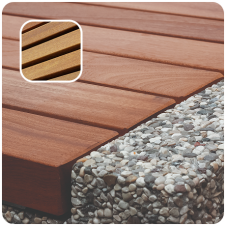
A hard wood with a medium to dark reddish‑brown color, depending on the age of the tree. It has very good natural durability even without maintenance. Mahogany sapelli comes from Africa. Specific weight: 670 kg/m³. durability class against biological agents: 2 (according to EN 350).
Larch
Larch
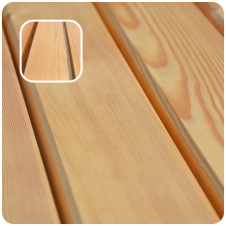
Due to the slower growth in Siberian forests, the annual rings are denser, making it more durable than European larch. This species is characterized by knots. To extend its durability, each board is coated with a special oil already during production. Latin name: Larix dahurica, specific weight: 600 kg/m³, durability class against biological agents: 3–4 (according to EN 350).
Spruce
Spruce
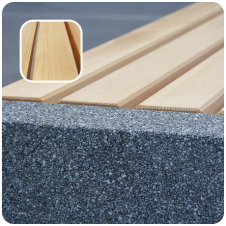
It is a fairly clean wood, with only occasional resin pockets. To extend its durability, each board is coated with a special oil already during production. Latin name: Abies (fir). Origin: Slovenia. Specific weight: 460 kg/m³. Durability class against biological agents: 4 (according to EN 350).
Impregnated spruce
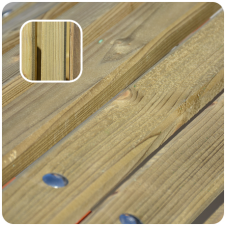
Impregnated spruce
Due to the slower growth in Siberian forests, the annual rings are denser, making it more durable than European larch. This species is characterized by knots. To extend its durability, each board is coated with a special oil already during production. Latin name: Larix dahurica, specific weight: 600 kg/m³, durability class against biological agents: 3–4 (according to EN 350).
Wood care
When exposed to weather conditions, the wood begins to age more rapidly and eventually develops a grey patina. To preserve the original colour and extend its lifespan, we recommend applying a protective wood oil twice a year. In hardware stores, ask for oil intended for wooden terraces and follow the manufacturer’s instructions. At first, when the wood comes into contact with water, natural wood dye — tannin — begins to leach out. This effect is especially strong in dark wood species such as oak and tropical hardwoods, where it can last for several months. Tannin can cause large and very difficult‑to‑remove stains on light surfaces. Particularly sensitive are light polished concrete floors and similar materials. In such cases, we recommend special measures — for example, using a light wood species (spruce, larch) or applying a high‑quality coating to the surface, as well as thoroughly and repeatedly rinsing the wooden elements before installation.

Manufacturing